
GEO-POWER-EU Research was presented at the 2026 European Security Studies Conference in Stockholm
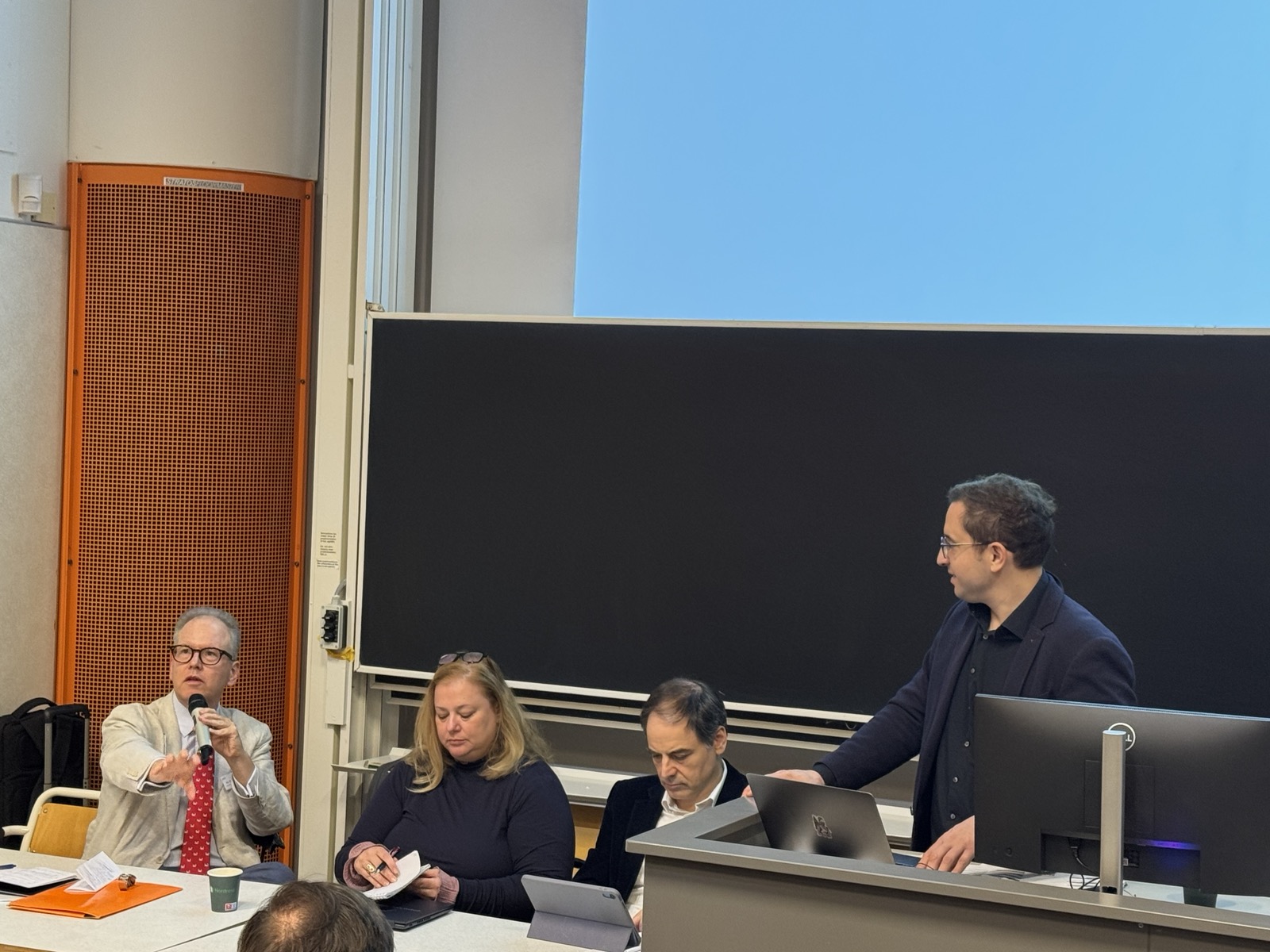
On 11–12 June, members of the GEO-POWER-EU consortium participated in the 2026 European Security Studies Conference (ESSC), hosted by Stockholm University and jointly organised by the COST Action NetSec, the European Initiative for Security Studies (EISS), and Stockholm University. The two-day conference brought together scholars and practitioners from across Europe to discuss the evolving landscape of European power and security. It also provided an opportunity for GEO-POWER-EU to present key findings from the project.
GEO-POWER-EU researchers organised a dedicated panel titled “Geopolitical Power Europe: A Reality Check in the Western Balkans and Eastern Neighbourhood,” chaired by Prof. Filip Ejdus (University of Belgrade). The panel featured contributions from GEO-POWER-EU PI Prof. Nikolaos Tzifakis (University of the Peloponnese); Asst. Prof. Marko Kovačević, Milan Varda, and Dr. Tijana Rečević Krstić (University of Belgrade); Dr. Kurt Bassuener (Democratization Policy Council, Sarajevo); and Prof. Filip Ejdus together with Dr. Alexandra Prodromidou, Faye Ververidou (York Europe Campus, Business School), and Dr. Sonja Stojanovic Gajic (University of Rijeka / University of Belgrade). Across four presentations, participants examined how the EU’s proclaimed “geopolitical turn” is reshaping enlargement policy and transforming relations with candidate and partner countries in the Western Balkans and Eastern Neighbourhood. Discussions addressed themes ranging from the EU’s identity and self-perception as a global actor to the increasingly transactional and conditional dynamics shaping accession processes and political dialogue, including the Pristina–Belgrade normalisation process.
The GEO-POWER-EU researchers highlighted the gap between EU policy objectives and the expectations and needs of countries in the Western Balkans and Eastern Partnership. Researchers also discussed the continuing relevance of the Eastern Partnership, the impact of corrosive capital and disinformation in the Western Balkans and the Associated Trio, and findings from the project’s Public Opinion Survey on Foreign Policy Perceptions in the Western Balkans and Eastern Partnership.