
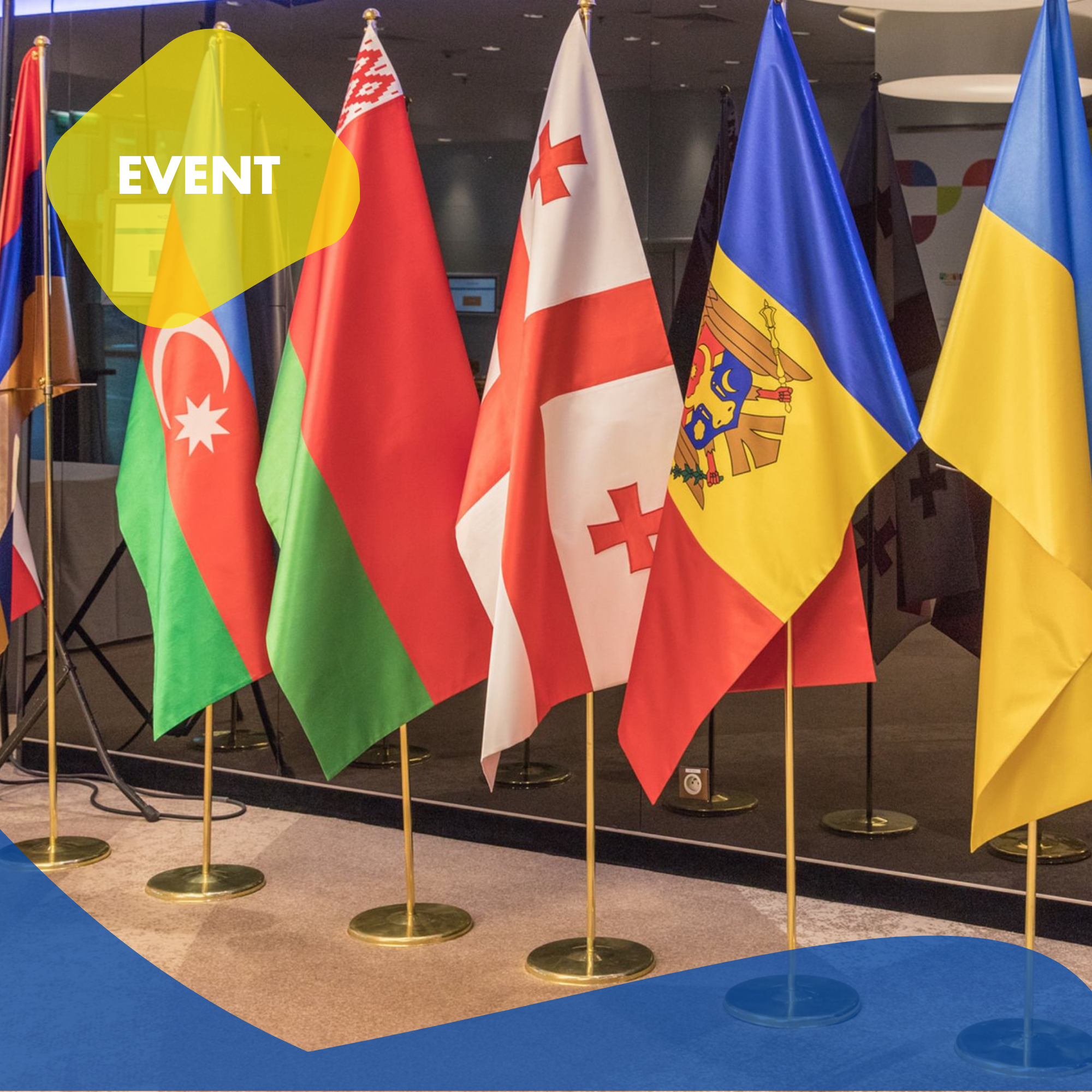
Joint Webinar by the Eastern Partnership Civil Society Forum and GEO-POWER-EU Explores the Relevance of the Eastern Partnership
On 19 February, the Eastern Partnership Civil Society Forum and GEO-POWER-EU jointly organised a webinar titled “Is the Eastern Partnership Still Relevant? Strategic Paths for EU–EaP Relations.” The discussion was built on the basis of the recent GEO-POWER-EU report “The Relevance of the Eastern Partnership (EaP)“, which examines how the EaP can adapt to today’s changing geopolitical realities and strengthen the EU’s role as a geopolitical actor.
The event opened with welcoming remarks by Kakha Gogolashvili, Director of EU Studies at the Georgian Foundation for Strategic and International Studies, who framed the debate around the central question of whether the EaP remains relevant in a geopolitical environment transformed by war.
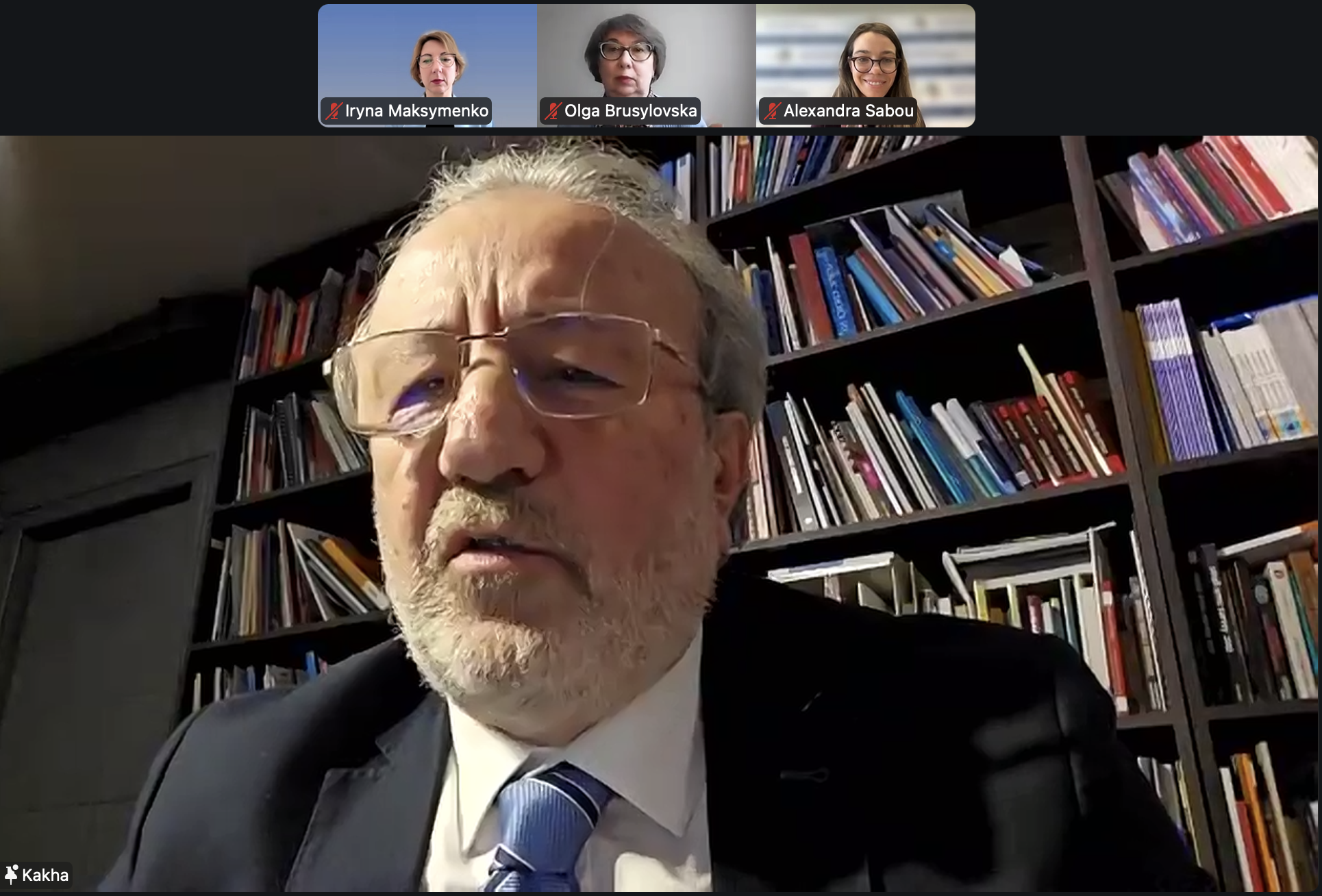
Alexandra Sabou, Advocacy and EaP Index Manager at the Secretariat of the Eastern Partnership Civil Society Forum, noted that while the EaP retains significance, it has become increasingly fragmented due to diverging political trajectories among partner countries. Asuman Kübra Baş, Head of Projects and Research at the European Neighbourhood Council, introduced the GEO-POWER-EU project and outlined its core assumptions. She noted that Russia’s war against Ukraine has fundamentally altered the EU’s geopolitical environment, requiring a more strategic and security-oriented approach toward both the Western Balkans and the Eastern Partnership.
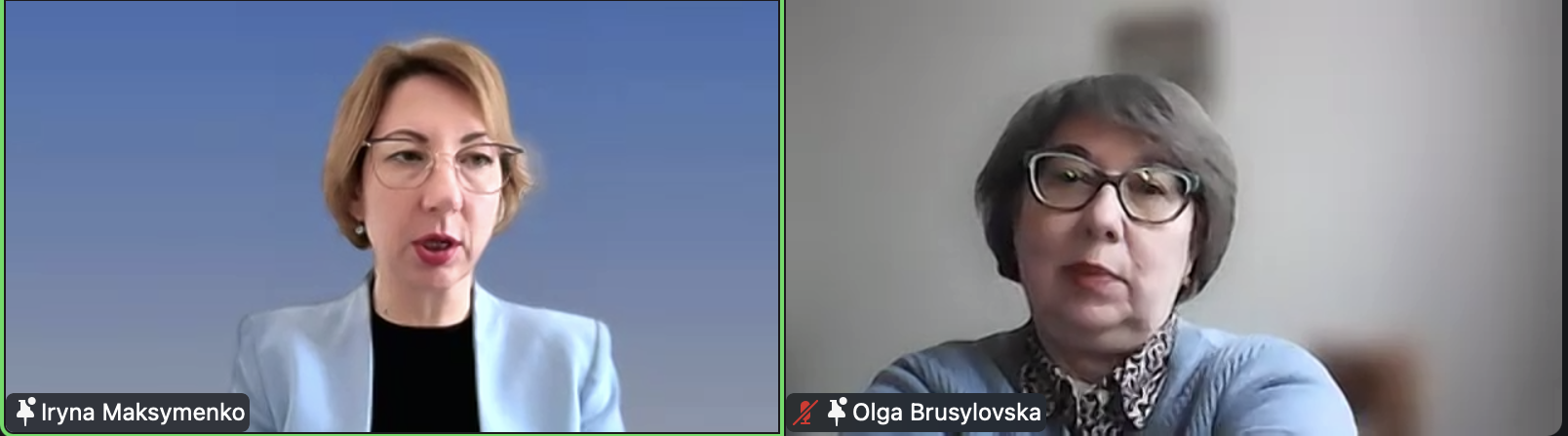
Professor Olga Brusylovska, Chair of the Department of International Relations at Odesa I. I. Mechnikov National University, outlined key report insights, noting that although milestones such as Association Agreements and visa liberalisation have been achieved, persistent governance gaps and security limitations have been exposed by Russia’s military aggression. Associate Professor Iryna Maksymenko emphasised that the EaP faces a critical challenge in adapting to the post-invasion security context, and that previous policy revisions have not provided a clear long-term strategic vision. A central conclusion of the discussion was that the absence of a robust security dimension remains the most serious deficiency of the EaP.
The webinar concluded with an interactive Q&A session with participants, further exploring policy recommendations for transforming the EaP into a more flexible, differentiated, and strategically coherent framework.
The full recording of the event is available to watch online.
*Featured Image: Young European Federalists