GEO-POWER-EU at the Belgrade Security Conference 2026
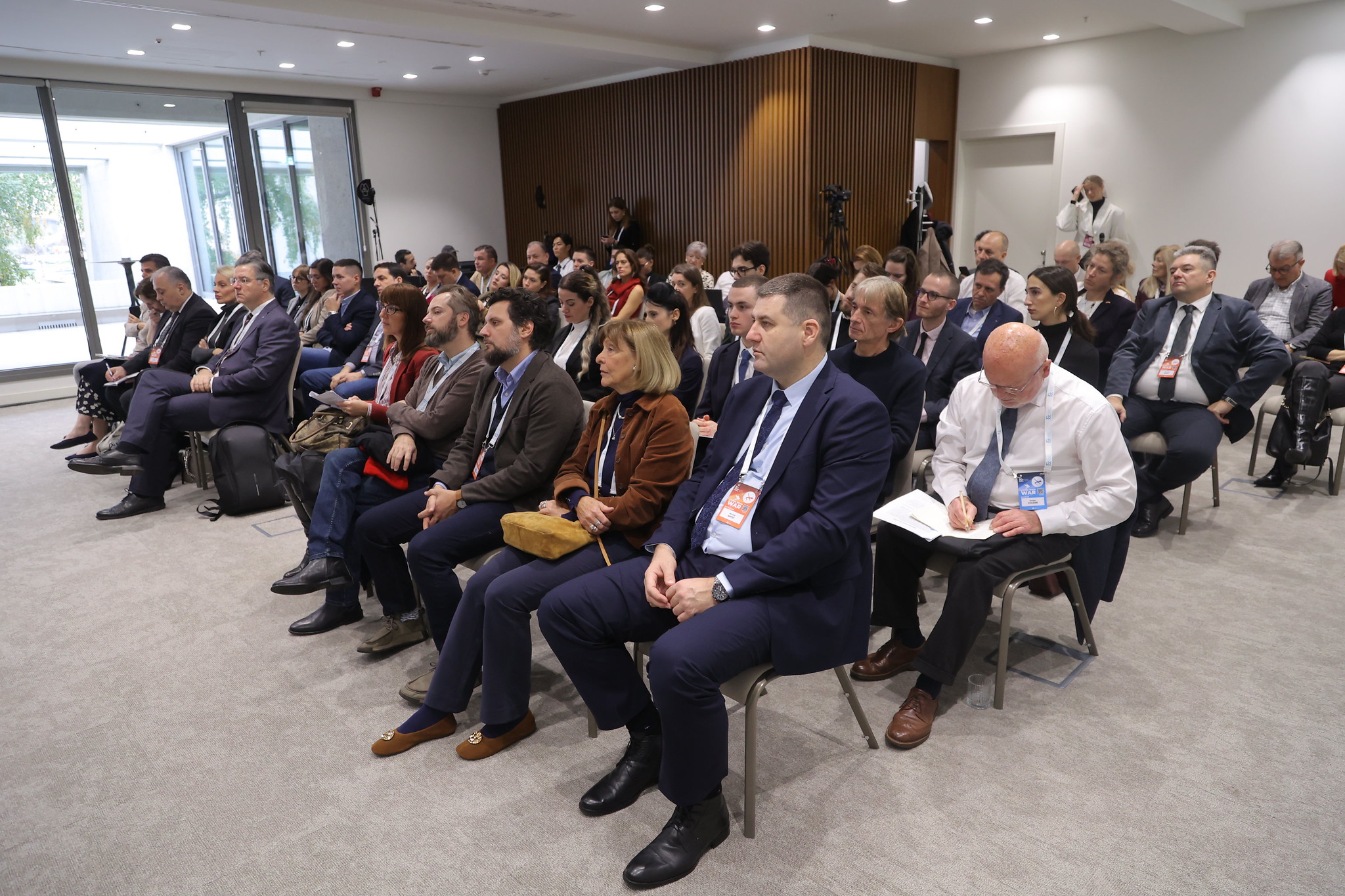
On 18 November 2026, members of the GEO-POWER-EU consortium participated in the Belgrade Security Conference 2026, contributing to discussions on the future of EU enlargement, European security and the geopolitical challenges facing EU candidate countries.
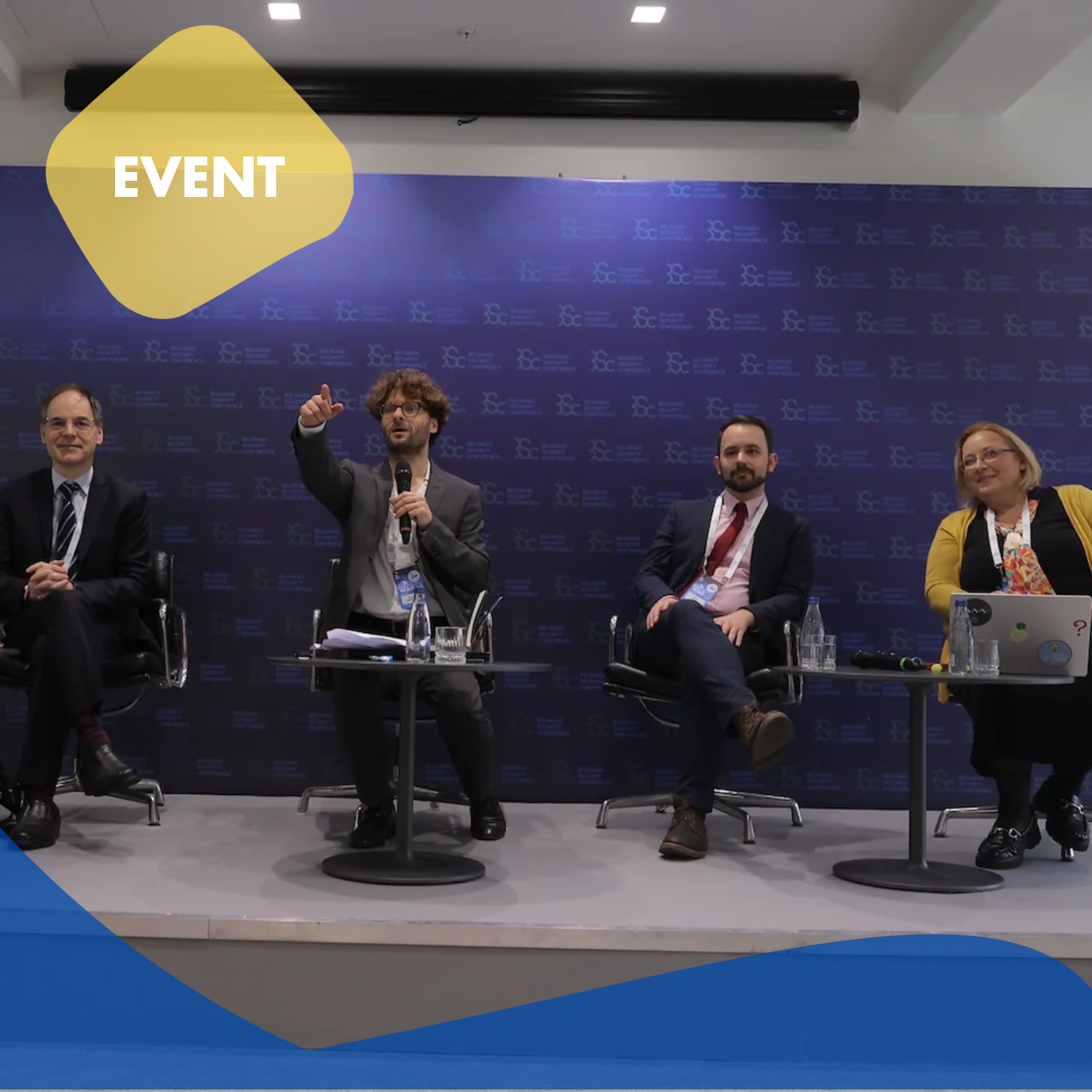
The consortium contributed to the panel “2031: An EU’s Enlargement Odyssey”, moderated by Branimir Jovanović(Vienna Institute for International Economic Studies, wiiw). The discussion featured Marcus How (VE Insight), Prof. Nikolaos Tzifakis (University of the Peloponnese, GEO-POWER-EU coordinator), Dr Sonja Stojanović Gajić (Center for Advanced Studies South East Europe, University of Rijeka) and Prof. Filip Ejdus (Faculty of Political Science, University of Belgrade). Together, the speakers examined the political, institutional and security challenges shaping the EU’s enlargement process and the possible trajectories of candidate countries towards 2031.
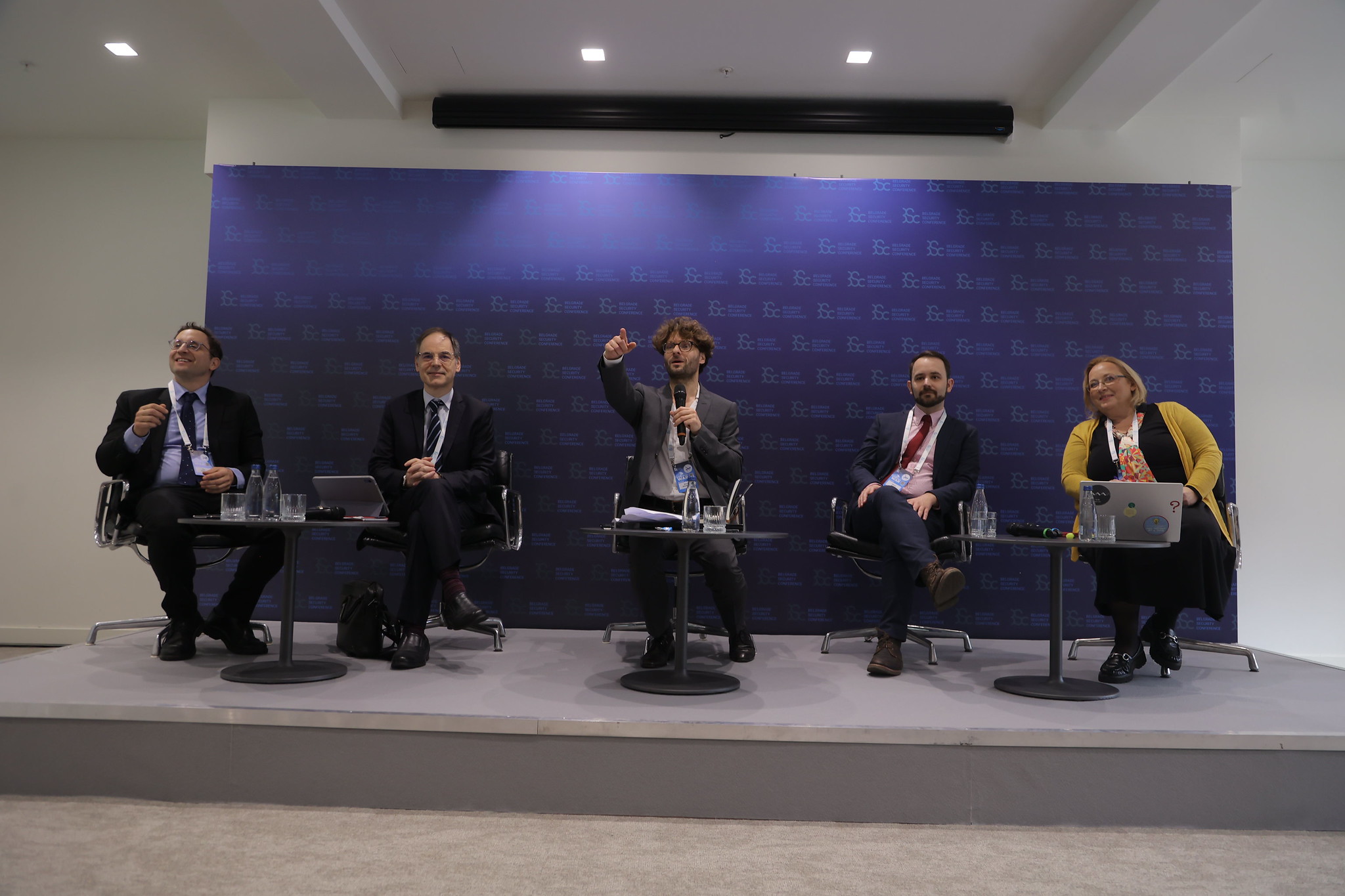
Marcus How presented findings from GEO-POWER-EU’s foresight research, which drew on the perspectives of 45 experts and identified eight possible scenarios for the region in 2031. The findings highlighted the risk of continued economic integration without meaningful progress towards EU membership or democratic reform.
Building on these findings, Prof. Nikolaos Tzifakis introduced GEO-POWER-EU’s three-track decision-making model, proposing more flexible voting procedures to overcome institutional obstacles and strengthen the credibility of EU enlargement. Dr Sonja Stojanović Gajić explored the security dimension, emphasising the need to link cooperation with candidate countries to democratic accountability, institutional oversight and meaningful reforms.
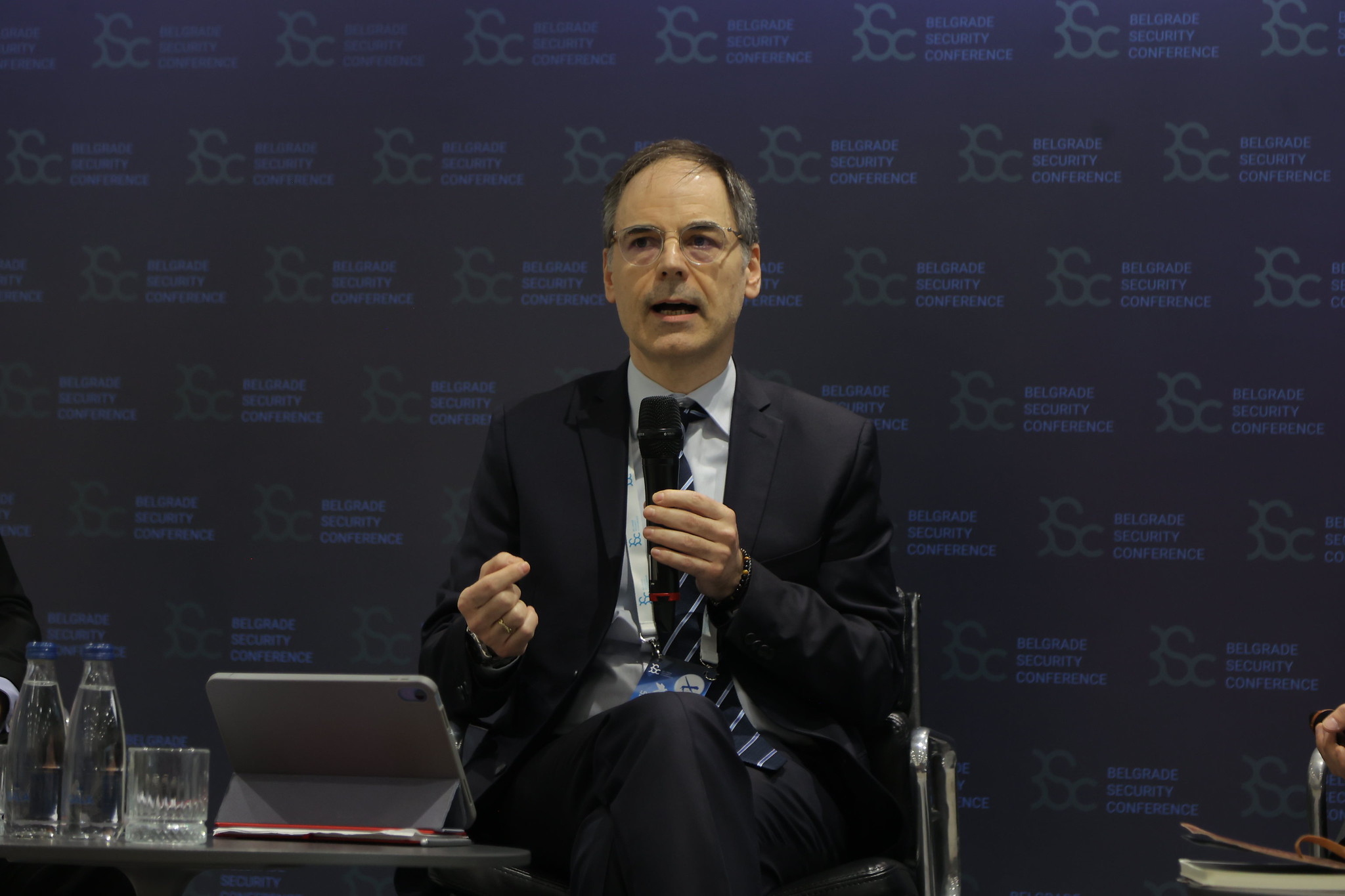
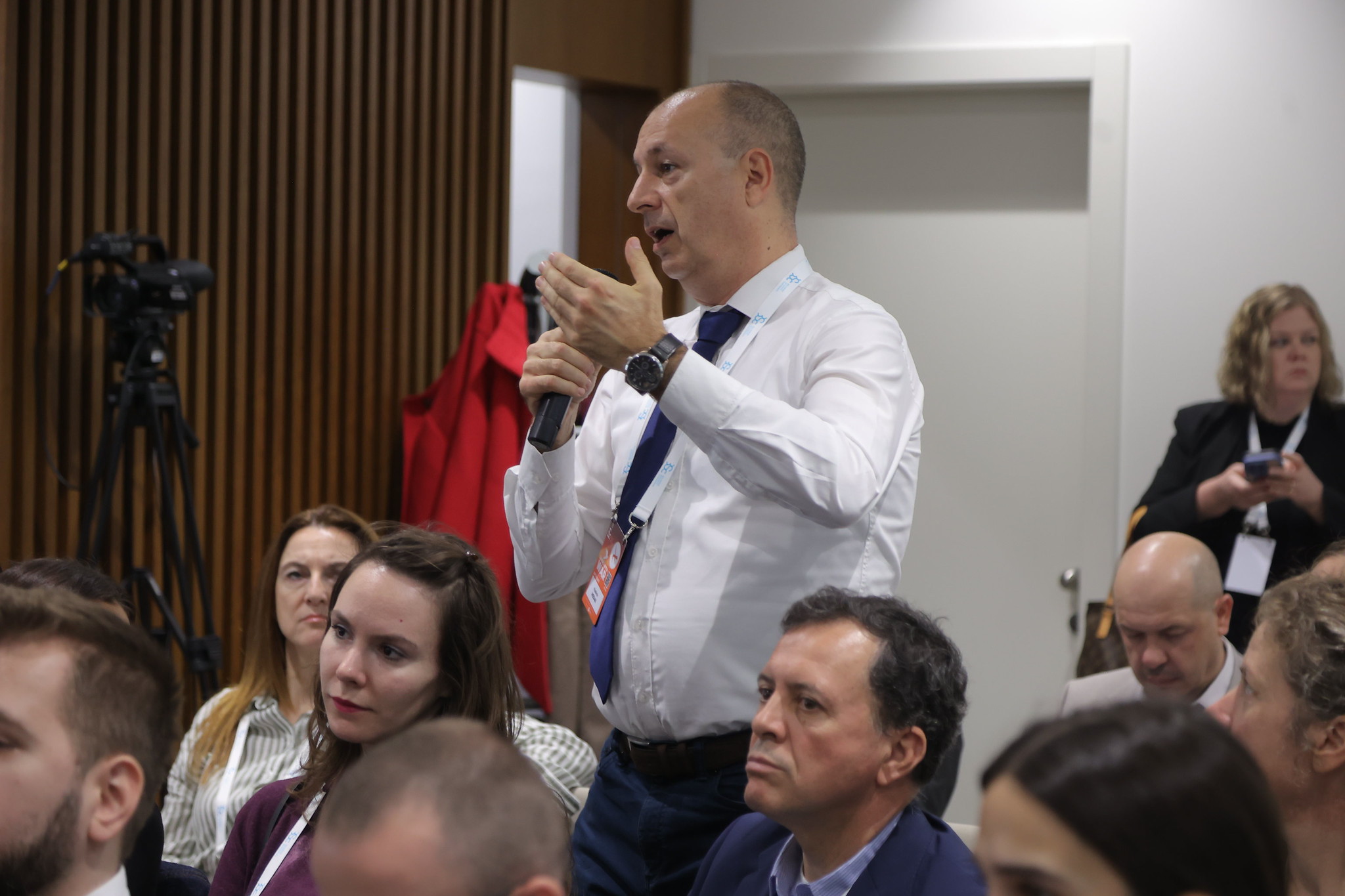
Prof. Filip Ejdus presented findings from a GEO-POWER-EU geopolitical strategy game, demonstrating how unconvincing EU commitments could weaken its regional influence and create opportunities for competing global powers. Moderated by Branimir Jovanović, the discussion also engaged the audience in reflecting on enlargement prospects, revealing scepticism about full EU membership by 2031.
 The session further introduced GEO-POWER-EU’s Interdependence Database, which maps political, economic and security relations between nine candidate countries and major international actors from 2008 to 2026. Together, these contributions highlighted a central question for GEO-POWER-EU: how can the EU strengthen the credibility of its enlargement commitments while promoting democratic reform and regional security? The Belgrade Security Conference provided an opportunity to share the project’s findings with the wider international relations community and explore their policy implications. These discussions will continue through co-creation studios until spring 2027, bringing research findings into dialogue with policymakers and stakeholders.
For further insights into the discussions and key takeaways from the event, read the coverage by European Western Balkans.